Home › Geophysical services › Vibration monitoring
10 / Vibration
Vibration monitoring
Ground motion is either measured or argued about. Instruments left running through the work settle the question before it becomes a claim — and measured before the work starts, they tell a designer what the building has to be isolated from.
Two different jobs
Vibration monitoring is sold as one service and is really two, with different clients and opposite questions.
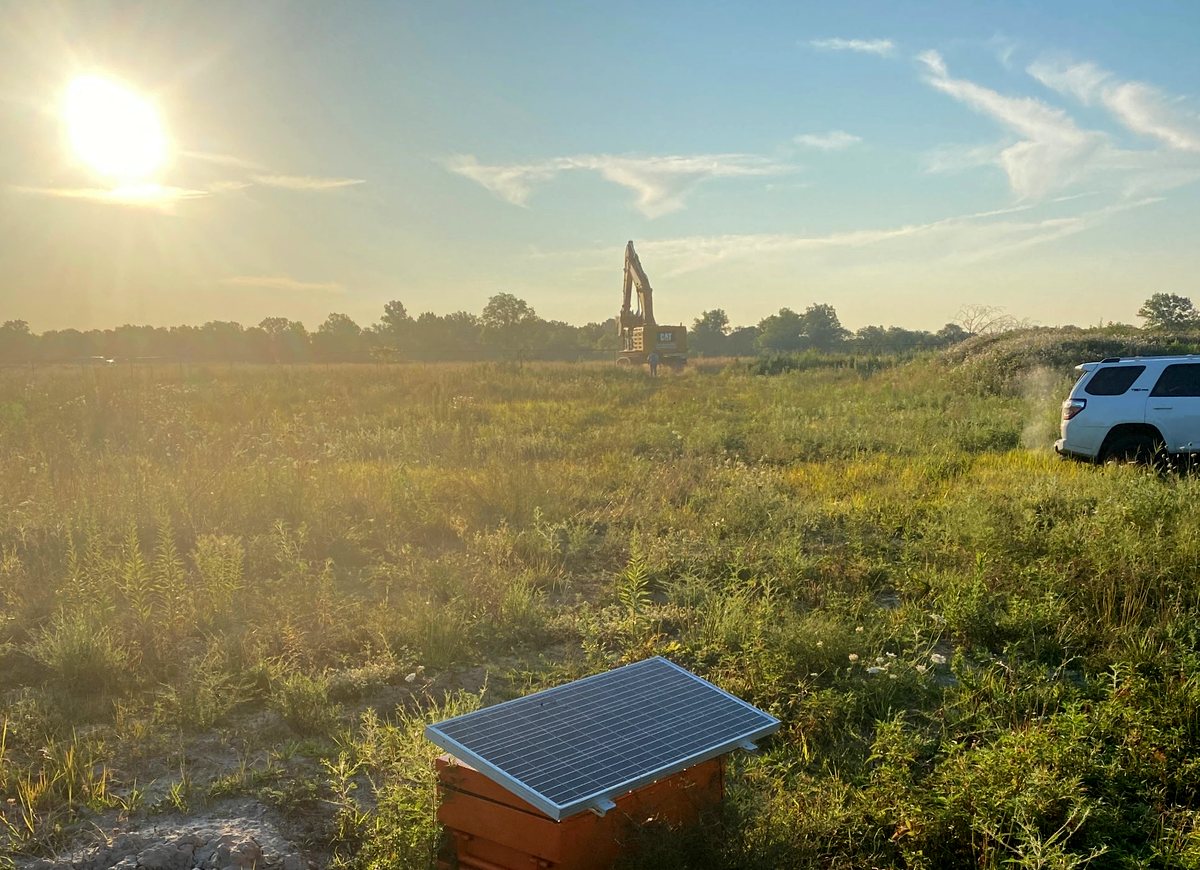
Construction vibration monitoring asks whether the work is staying within a limit — set by a permit, an ordinance, a neighbouring owner or a utility. The instrument sits between you and a damage claim, and its value is that it was running continuously and independently rather than being switched on when somebody got nervous.
Baseline vibration analysis asks the opposite: what does this ground already do when nothing is happening? That question comes from architects and engineers designing buildings that contain something intolerant of motion — an electron microscope, an imaging suite, a metrology bench, a quiet room. You cannot design isolation against a number nobody has measured.
What is actually recorded
Ground motion is resolved into three mutually perpendicular components — vertical, longitudinal and transverse — with the longitudinal axis aligned to the geometry that matters on the site. For each component the instrument records peak particle velocity in inches per second and the frequency at which that peak occurred, because the same velocity at 4 Hz and at 90 Hz are not the same event and no damage criterion treats them as such.
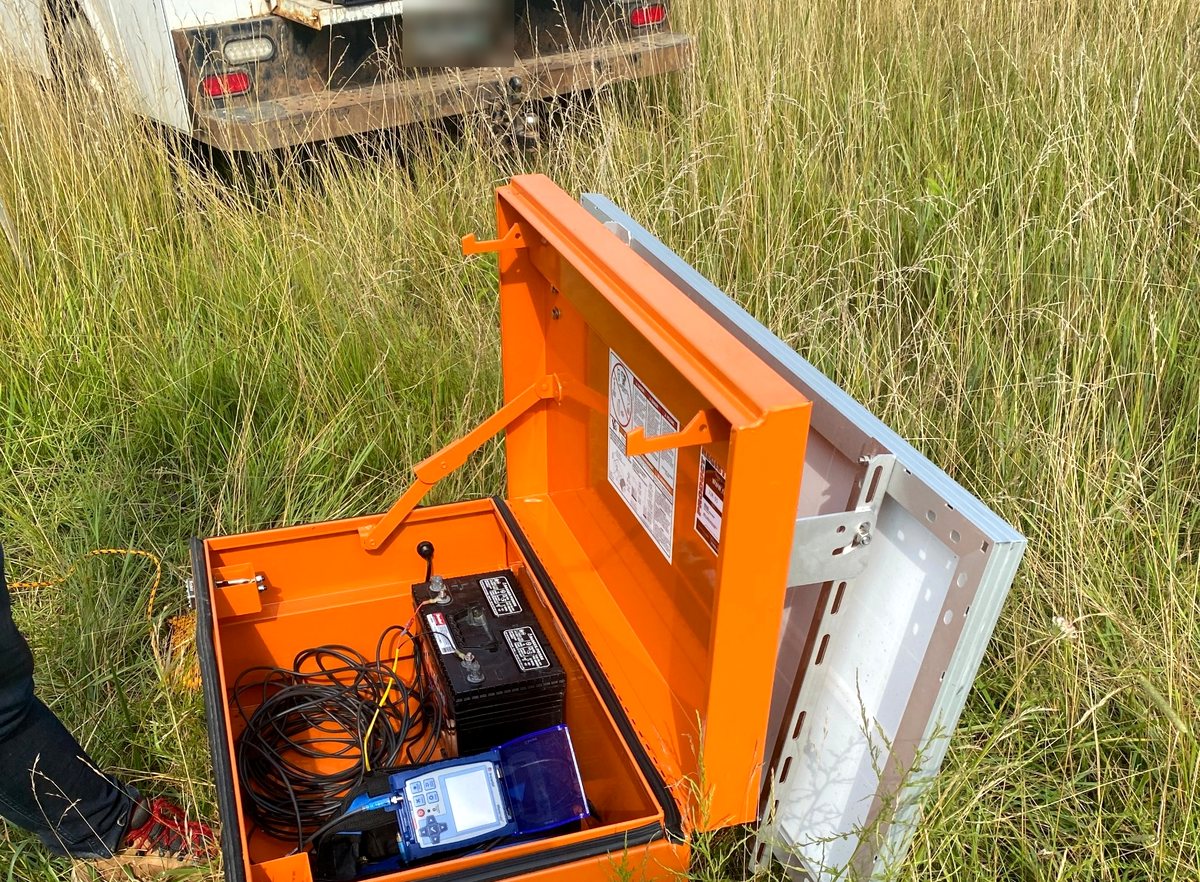
Our seismographs are Instantel Micromate units, ISEE specification, with calibration traceable to NIST. Records are assessed against the USBM RI 8507 and OSMRE frequency-dependent limits, or against whatever criterion the permit or the specifying engineer has set.
Unattended, which is the only way it is worth doing
An attended survey tells you about the hours somebody stood there. Vibration does not keep office hours. The haul road at 05:40, the rail movement at midnight, the plant that only runs on a Saturday — these are the events that matter and they are the ones an attended survey misses.
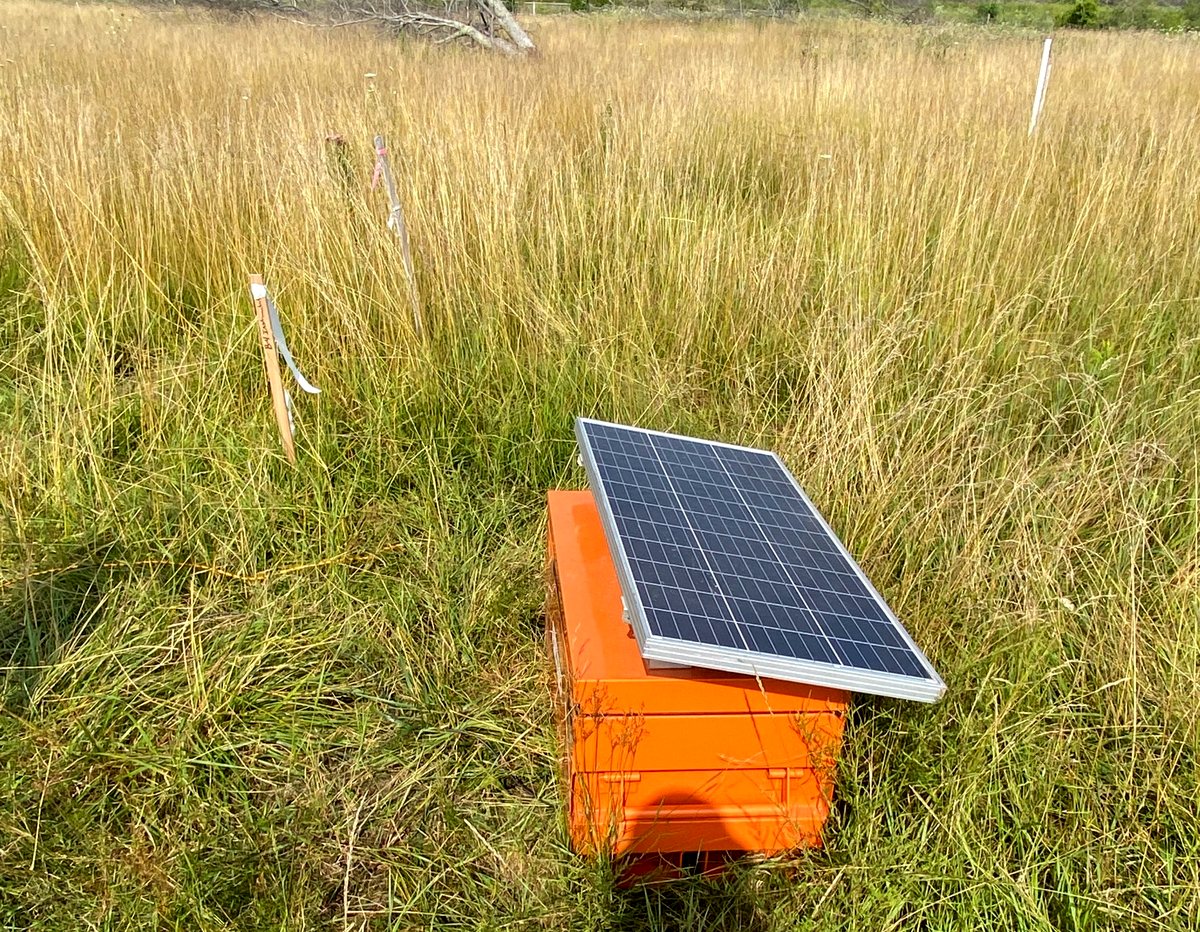
Our stations are solar powered and left in place for the duration, recording continuously and sampling the peak on each plane at five-second intervals around the clock. A two-week deployment produces a record of roughly a quarter of a million intervals per location. That is a defensible dataset; a morning's attended monitoring is an anecdote.
Downhole, where the foundation will be
This is the part most firms do not offer, and on a sensitive facility it is the part that matters.
A geophone spiked into the surface measures the surface, and the surface is the noisiest place on any site — wind in vegetation, thermal cracking, surface traffic coupling, the softest and least representative material on the plot. A building does not sit on that. It sits on the ground at founding depth.
So we set borehole geophones in drilled shafts and backfill around them to couple them properly to the ground, at the depth the structure will engage — routinely twenty to fifty feet — and record there. On a recent R&D facility we instrumented three locations at 22, 40 and 48 feet and recorded continuously for a fortnight.
What it will not tell you
A baseline measures the site as it is on the days it was measured. It is not a forecast. A quarry that opens two miles away next year, a road widened, a new rail schedule — none of these are in the record, and a baseline should be read as a characterisation rather than a guarantee.
The ground itself also changes. Where a site is to be raised with engineered fill, the material the building will stand on is not the material that was measured; different composition and compaction will shift both amplitude and frequency. Where that matters we say so, and recommend a second period of monitoring at final grade rather than letting the first set of numbers carry more weight than it can bear.
And peak particle velocity is a structural damage metric. It is the right measure for construction compliance and for characterising a site. Where a specification is written in one-third octave bands against vibration criteria curves, that is a different measurement and it should be commissioned as one.
Where it fits
Research and R&D facilities, imaging suites and metrology spaces, hospitals, data centers, and any building with a room that has to be quiet. On those projects vibration is only half the question — the other half is electromagnetic and radio-frequency interference, and the two usually run on the same mobilization.
On the construction side: demolition, excavation and rock breaking, pile driving, compaction, and heavy haulage past structures somebody is worried about.
Equipment and capability
- Instantel Micromate seismographs, ISEE, NIST-traceable calibration
- Borehole geophones installed and backfilled at founding depth
- Solar-powered unattended stations for multi-week deployments
- Three-component recording with frequency at peak
- USBM RI 8507 and OSMRE compliance assessment
- Pre-construction baseline for vibration-sensitive facilities
- Surveyed station positions tied to the building footprint
What you receive
Daily maximum particle velocity and frequency for every plane at every location, time-stamped; event reports for anything of interest; the compliance plot against the governing criterion; and an interpretation that says what the numbers mean for the decision in front of you rather than leaving you to work it out from a stack of printouts.
Ask before you commission
Tell us the target, the ground and the constraint and we will say whether this method answers it, whether it needs a second method alongside, or whether something else entirely is the better route. That conversation is free and it is usually short.